Description
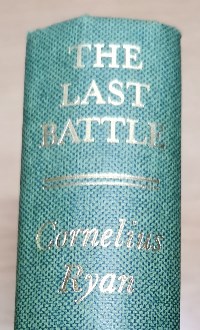
“The Last Battle” by Cornelius Ryan is a detailed historical account of the Battle of Berlin (April–May 1945), the final major battle of World War II in Europe. First published in 1966, the book provides a gripping, multi-perspective narrative of the collapse of Nazi Germany, focusing on the political, military, and civilian experiences leading up to the fall of Berlin and the suicide of Adolf Hitler.
Summary
1. Setting the Stage
Ryan begins by describing the situation in early 1945. Nazi Germany is on the brink of collapse, with the Soviet Red Army advancing from the east and the Western Allies pushing in from the west. Berlin, Hitler’s capital, is poorly defended, but Hitler insists on making a last stand, believing that some last-minute miracle might save his regime.
2. The Race to Berlin
The book highlights the race between the Western Allies and the Soviets to capture Berlin.
Winston Churchill wanted the Western Allies to reach Berlin first, fearing Soviet control over Eastern Europe.
Dwight D. Eisenhower, however, prioritised avoiding unnecessary casualties and focused on defeating German forces elsewhere rather than taking Berlin.
This decision left Berlin open for the Soviets, leading to the brutal Battle of Berlin.
3. The Soviet Assault
Joseph Stalin ordered a massive Soviet offensive to take Berlin, with Marshal Zhukov’s and Marshal Konev’s forces leading the attack.
The battle was one of the most intense of the war, with Soviet artillery reducing much of Berlin to rubble.
German forces, including teenage Hitler Youth and elderly Volkssturm militias, put up fierce but hopeless resistance.
The Soviets suffered enormous casualties, but their superior numbers overwhelmed the defenders.
4. Hitler’s Last Days
Inside the Führerbunker, Adolf Hitler and his inner circle were increasingly delusional.
Hitler refused to surrender, issuing meaningless orders to non-existent armies.
As Soviet troops closed in, he finally accepted defeat and committed suicide on April 30, 1945, along with Eva Braun.
His body was burned by loyal followers to prevent it from falling into Soviet hands.
5. The Aftermath
With Hitler dead, German forces in Berlin officially surrendered on May 2, 1945, though the war in Europe ended a few days later on May 8 (V-E Day).
The Soviets took full control of Berlin, leading to widespread looting, destruction, and atrocities, including the mass rape of German women by Red Army soldiers.
The city was left in ruins, and the division of Berlin between the Soviets and the Western Allies laid the groundwork for the Cold War.
Conclusion
“The Last Battle” is a compelling, well-researched account of one of the most significant battles in history. Ryan’s use of firsthand interviews and detailed storytelling brings the fall of Berlin to life, making this an essential read for anyone interested in World War II, military strategy, and the end of Nazi Germany.


